
Proper drainage forms the foundation of any successful patio installation. Without adequate water management, even premium materials can fail prematurely through water damage, frost heave, and structural instability.
Understanding slope requirements and drainage principles protects your investment whilst preventing costly repairs. Crawley’s clay soil conditions make this consideration particularly crucial for local homeowners.
Essential Slope Requirements
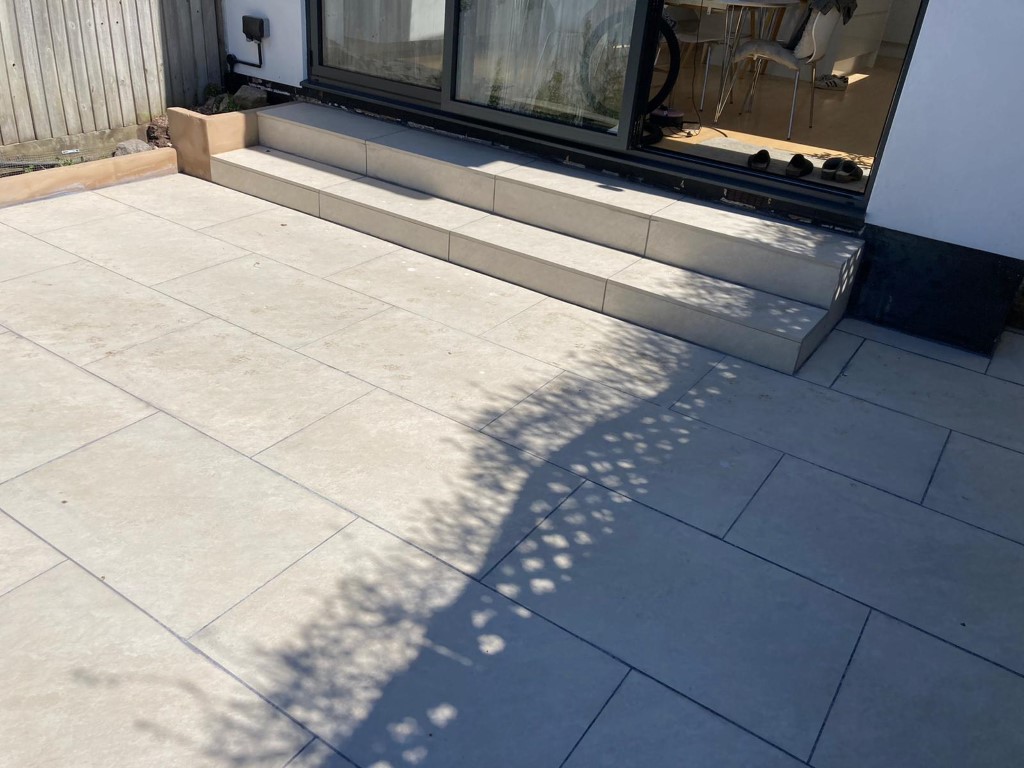
Proper drainage requires a minimum fall of 1:80 across the patio surface. Experienced patio installers ensure this gradient prevents water pooling and structural damage over time.
Every patio requires a minimum fall of 1:80 away from buildings. This translates to approximately 12.5mm drop per metre of patio width, ensuring water flows away from your property rather than pooling.
- Minimum gradient: 1:80 (1.25% slope)
- Preferred gradient: 1:60 for better drainage
- Direction: Always slope away from house walls
- Multiple fall directions for large patios
Drainage Solutions
Several drainage methods suit different patio designs and local conditions. The choice depends on your property’s layout, soil type, and local water table levels.
Surface drainage removes water through natural runoff and evaporation. This basic method works well for smaller patios with adequate natural drainage routes.
Channel drainage systems collect water along patio edges. These linear drains connect to soakaways or existing drainage networks, ideal for larger installations.
Permeable paving allows water to pass through the surface into prepared sub-base layers. This sustainable solution reduces surface runoff whilst maintaining structural integrity.
Crawley Soil Considerations
Local clay soils present specific challenges for patio drainage. Clay retains water longer than sandy soils, creating potential instability and frost damage risks during winter months.
Installing adequate sub-base drainage becomes essential. This typically involves deeper excavation, additional hardcore layers, and potentially French drains around patio perimeters. Similar drainage principles apply to driveway installations, where material choice affects long-term durability.
Professional soil assessment helps determine the most appropriate drainage strategy for your specific site conditions and prevents future structural problems.